
TBI Reports
TBI Reports Download
The Black Institute (TBI) provides comprehensive reports on a variety of issues affecting the lives of Black families and immigrants to provide you with insight into how we confront and influence policy at no cost to you. Click on the report you would like to download to begin the download.
We Don’t Just Study Problems. We Deliver Solution
Hire The Black Institute to deliver Research that informs decisions and drives impact.
Our team produces data-driven reports, policy analysis, and community- informed insights across key issue areas. We work with government, foundations, and organizations to ensure strategies are grounded in real data and real people.
If you need research that leads to action, not just information, partner with us.
Book a consultation: Administrative Assistant, Kayla Cummings: kcummings@theblackinstitute.org
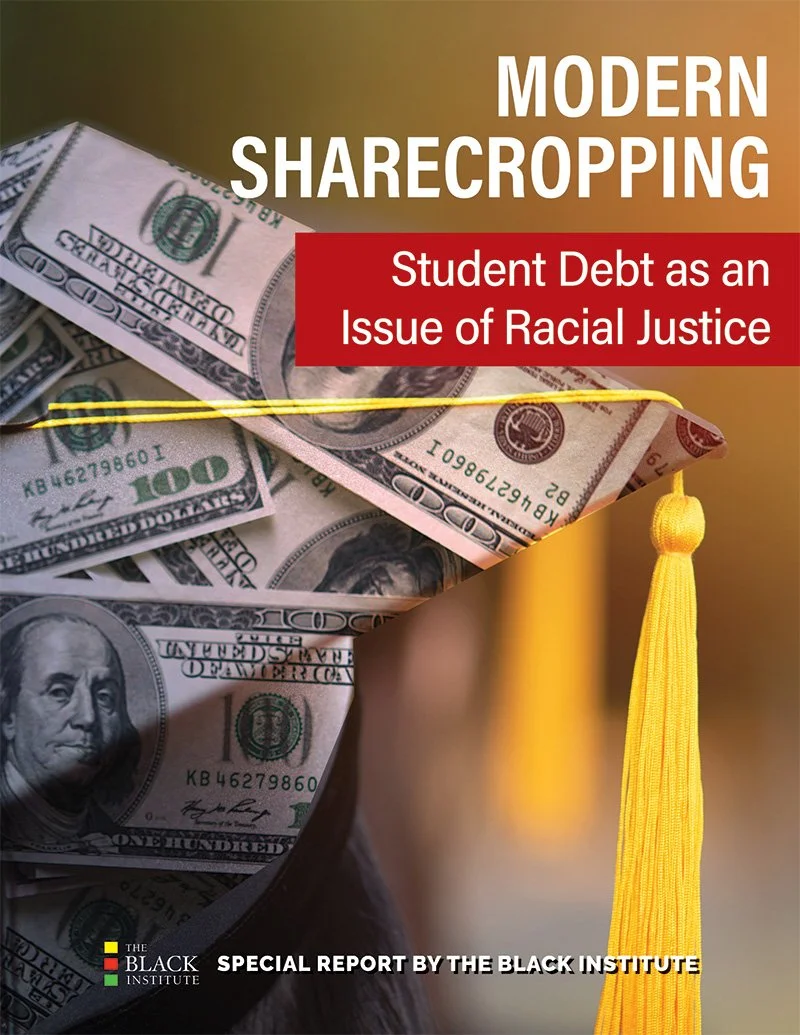
The issue of student debt represents one of the most important debates in modern politics, as well as one of its greatest crises. Nearly one third of America has some amount of student debt, a figure that has ballooned in recent years, and the total weight of that debt has likewise grown to top a staggering 1 trillion-dollar figure. Debt of all kinds rules much of American life, but nowhere are the crippling effects of student debt more pronounced then in our most vulnerable populations; communities of color. Yet the research and discussion around student debt in relation to people of color specifically has been disappointingly minimal. In this report, The Black Institute (TBI), seeks to remedy this lack of focus on our most vulnerable populations by examining the issue of student debt from the perspective of these communities of color.
The Black Institute engaged in exploratory research concerning the construction of the Mets stadium and promises that were made by the Mets organization. In particular, TBI was interested in gauging the efficacy of promises regarding the participation of MWBE and Queens residents in the construction of Citi Field, the continuing employment of individuals from those categories, and whether these efforts were successful. However, TBI was also interested in the broad impact of Citi Field on the local economy since the construction and the general promises of stadium construction compared to the actual effects of their construction and continued operation.
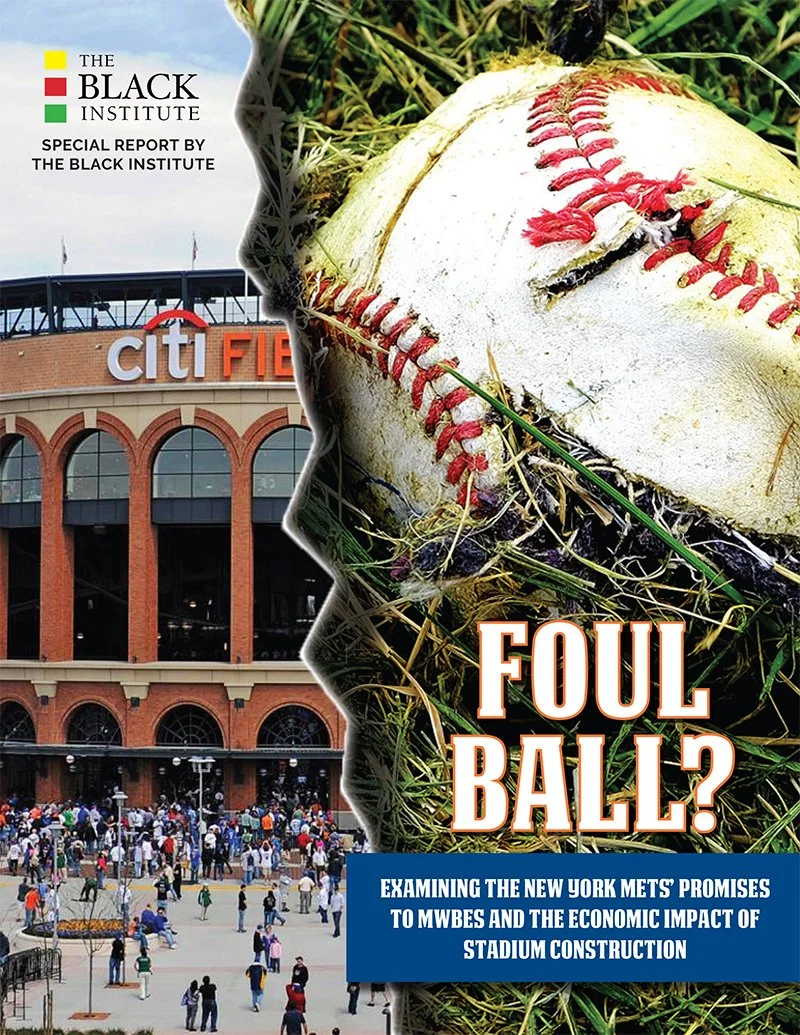
The Black Institute engaged in exploratory research concerning the construction of the Mets stadium and promises that were made by the Mets organization. In particular, TBI was interested in gauging the efficacy of promises regarding the participation of MWBE and Queens residents in the construction of Citi Field, the continuing employment of individuals from those categories, and whether these efforts were successful. However, TBI was also interested in the broad impact of Citi Field on the local economy since the construction and the general promises of stadium construction compared to the actual effects of their construction and continued operation.

The gun violence epidemic and recent rises in firearm deaths, especially homicides, is a threat of existential proportions for the United States. While all communities are threatened by this rise, it is communities of color that have continuously borne the largest share of violent firearm shootings in New York and the nation at large. As just one of the many organizations who are concerned about the threat firearms pose for the future safety of our communities, The Black Institute (TBI) has undertaken a general review of the issue in order to detail not just the symptoms of this disease, but especially the major underlying causes as well as a review of possible options to help deal with this crisis,
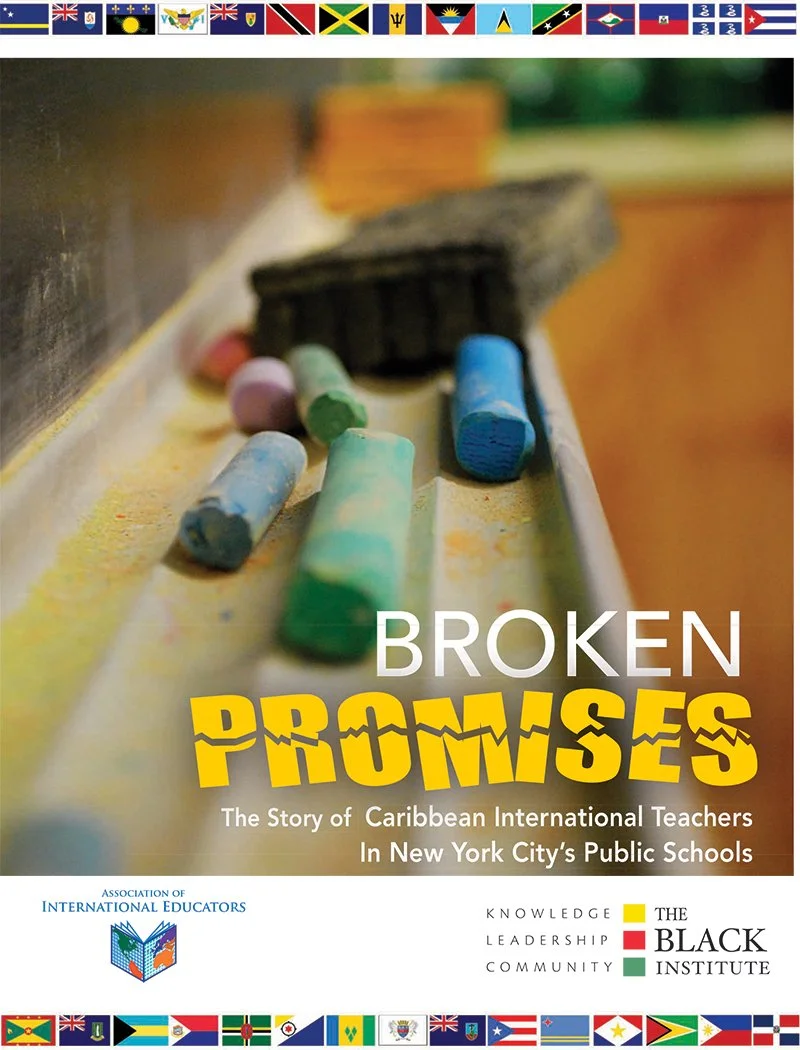
Almost a decade ago, the New York City Board of Education aggressively recruited a group of experienced teachers largely from Caribbean nations. These skilled professionals were enticed to come to the United States with the clear understanding of a number of commitments. In fact, it was the promises of New York State teacher certification, Master’s degrees, housing assistance and ultimately, a pathway to permanent United States residency for themselves and their nuclear families, which prompted them to uproot themselves and their families to teach in our public schools. By and large, although many of these teachers remain in our school system, teaching our children, these promises were never kept.
The team of TBI and MARLS NYC has reviewed much of the existing literature concerning the handling of government relief programs and the equitable distribution of these funds to small minority-and women-owned business enterprises (MWBEs), in addition to conducting its own survey of small businesses across New York City and New York. The outcome of these efforts describes a fight for survival by minority businesses across the state and country - of businesses having been ignored not only by private organizations but by the government itself.
The state of New York recently introduced new legislation and initiatives regarding single- use bags within the city and the state with the goal to eradicate plastic bags and reduce the usage of other single-use bags (such as paper bags) through the introduction of both a total ban on plastic and a punitive tax on paper. While these efforts are commendable from an environmental perspective, the economic fallout from these proposed laws could have farther-reaching, and potentially devastating, economic effects for many of the state’s financially disadvantaged citizens, especially those in New York City’s poorest neighborhoods. This was not the result of an extended debate or any other democratic process. Instead, it was decided by select members ofAndrew Cuomo’s government during closed-door budget negotiations, carried on without the input of the citizens who would be most affected by this move. By slipping this proposal into the budget, without citizen input, the state has disregarded those whom it should be serving and denied them the opportunity to voice their concerns.
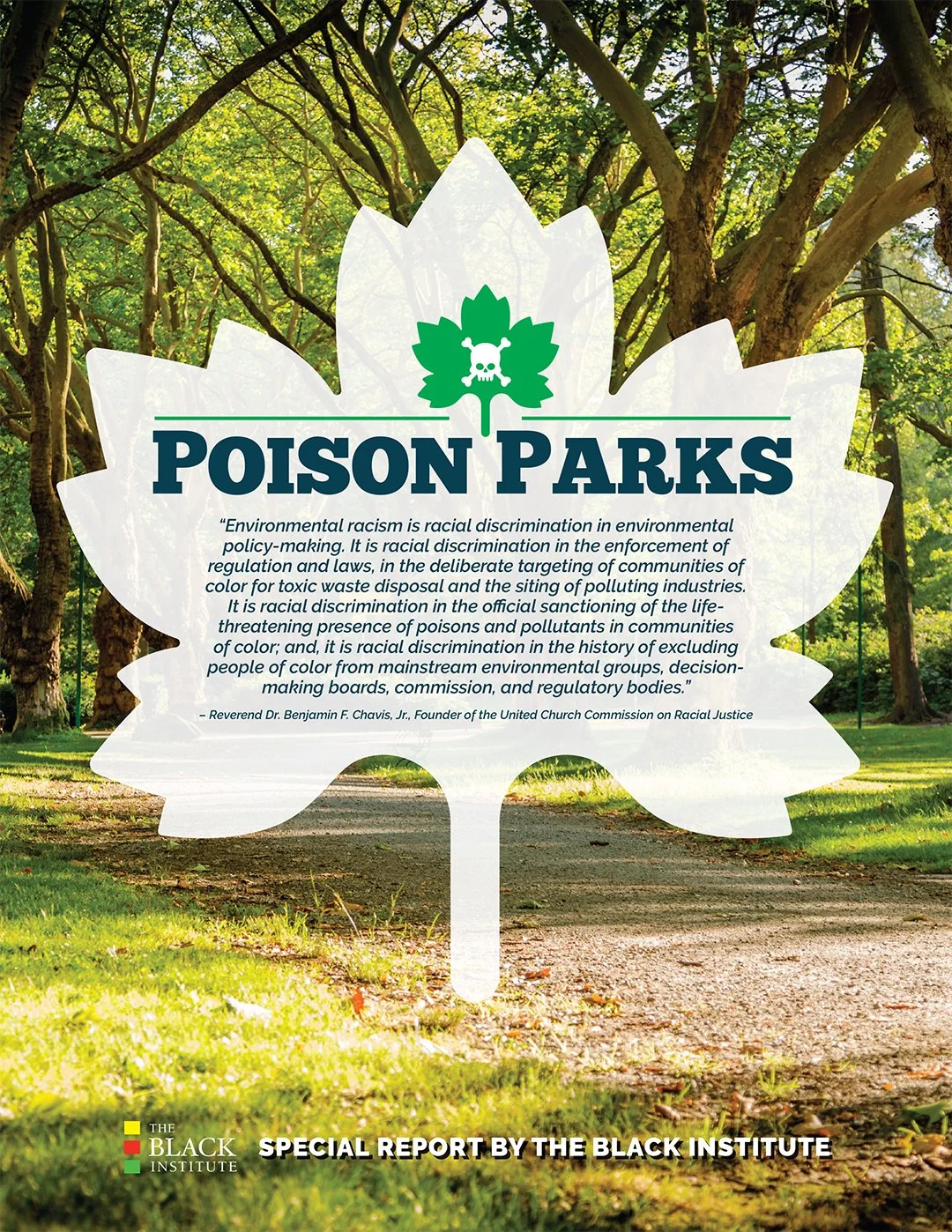
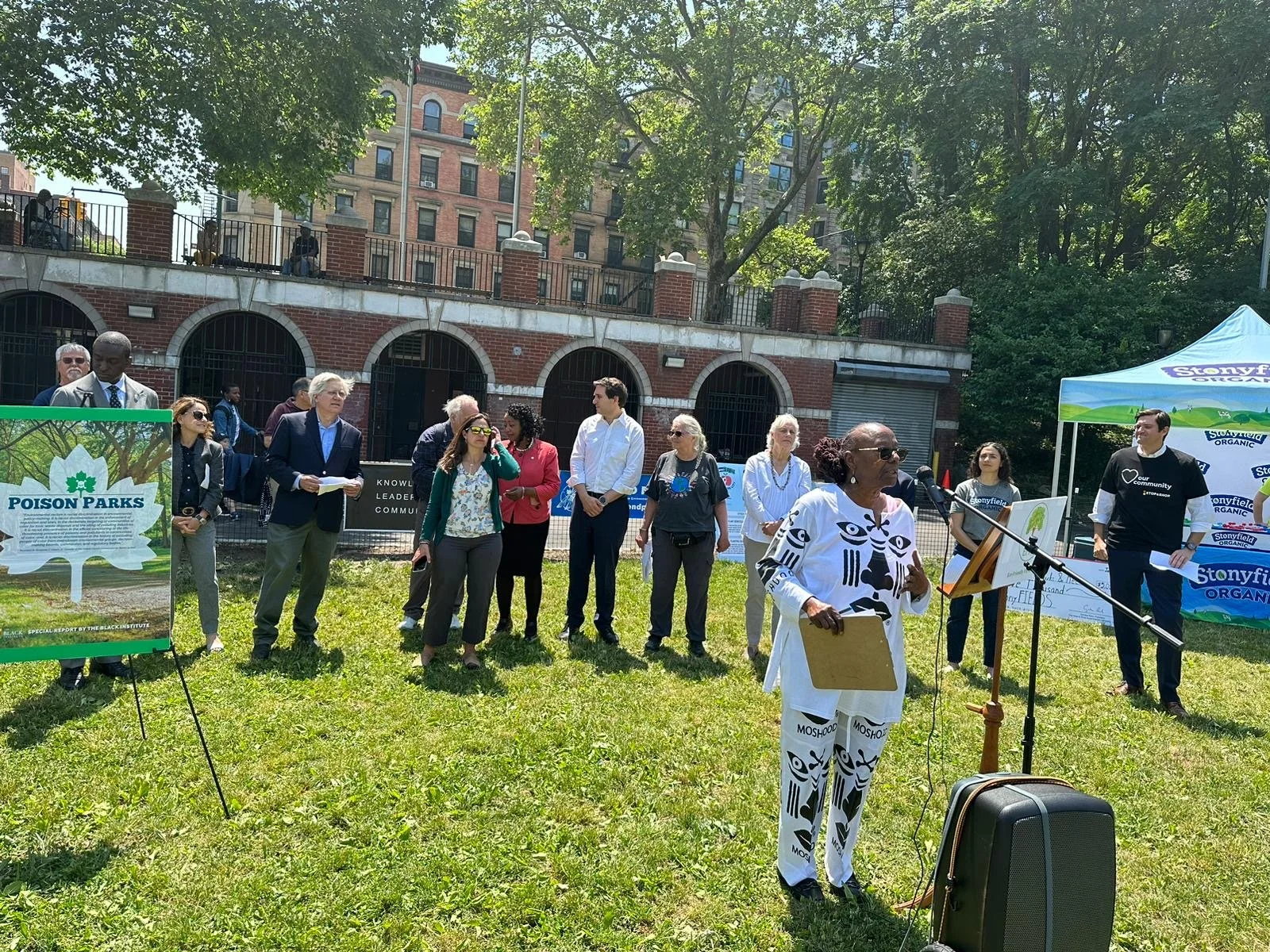
The New York City Parks Department has long used Roundup to control weeds on city property. This toxic herbicide is manufactured by agro-technological company, Monsanto. Roundup contains a cocktail of chemicals that are linked to severe kidney damage, asthma, non-Hodgkin’s Lymphoma, and birth defects, among other grave disorders and side effects. Following multiple extensive studies, the International Agency for Research on Cancer (IARC), a division of the World Health Organization, considered glyphosate a “probabl[e] carcinogen”—linking the herbicide to non- Hodgkin’s Lymphoma and lung cancer in humans, a variety of cancers in rodents, chromosomal damage in mammals, and reproductive errors in amphibians. It is a terrifying reality that more than 500 gallons of this chemical were sprayed throughout New York City in 2016.1 Minority and low-income communities suffer from the use of this chemical and have become victims of environmental racism.
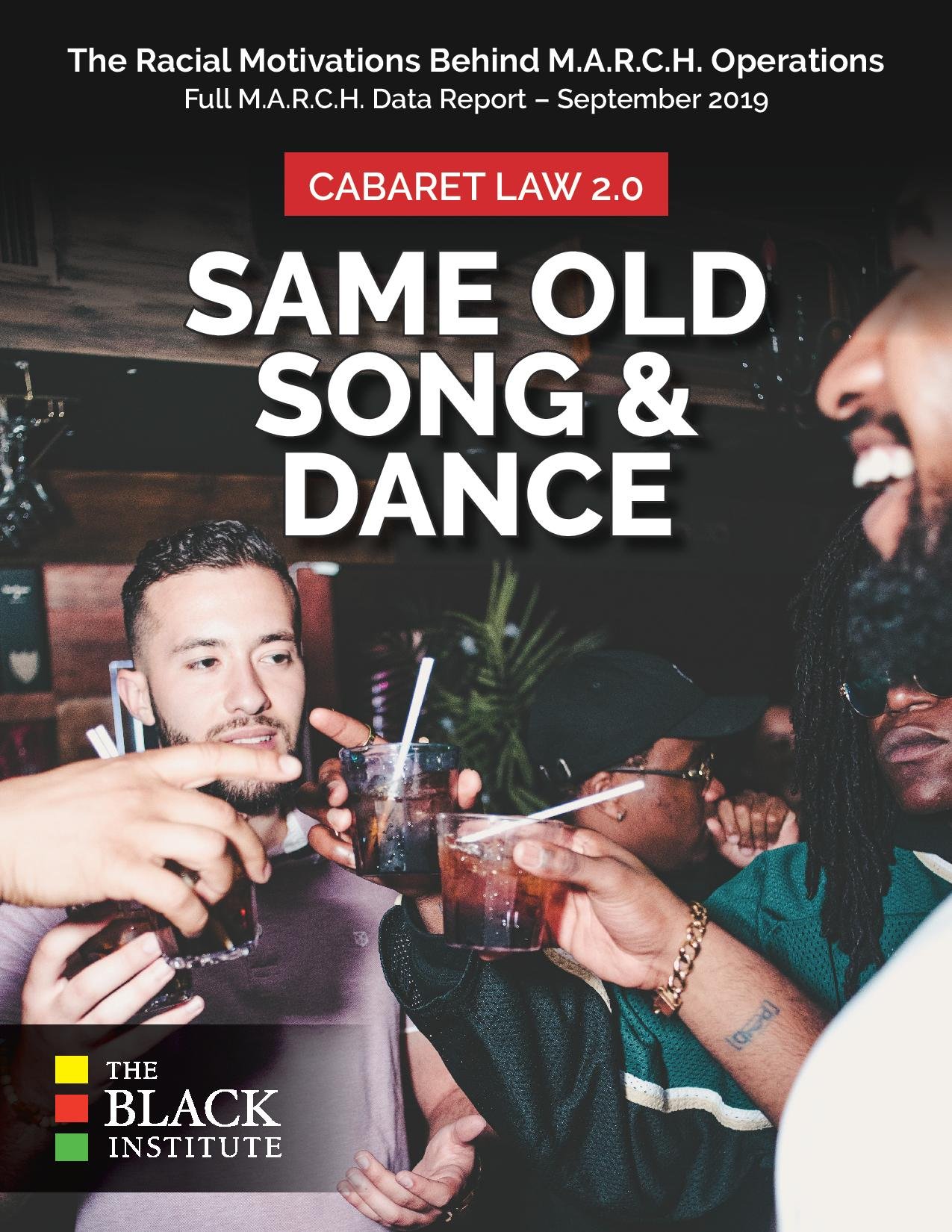
New York City and New York State have been using their enforcement capabilities to terrorize, intimidate, harass and shut down businesses for nearly a century. What began in the 1920s with Cabaret Laws designed to close down jazz clubs at the height of the Harlem Renaissance, to the birth of the modern day LGBTQ movement in Greenwich Village has continued through Mayor Giuliani, Mayor Bloomberg and now Mayor de Blasio. From the first Governor Cuomo to our current one, these tools of institutional racism and discrimination have been aimed at minority owned businesses and those establishments that create a safe place for marginalized communities to gather.
The issue of student debt represents one of the most important debates in modern politics, as well as one of its greatest crises. Nearly one third of America has some amount of student debt, a figure that has ballooned in recent years, and the total weight of that debt has likewise grown to top a staggering 1 trillion-dollar figure. Debt of all kinds rules much of American life, but nowhere are the crippling effects of student debt more pronounced then in our most vulnerable populations; communities of color. Yet the research and discussion around student debt in relation to people of color specifically has been disappointingly minimal. In this report, The Black Institute (TBI), seeks to remedy this lack of focus on our most vulnerable populations by examining the issue of student debt from the perspective of these communities of color.
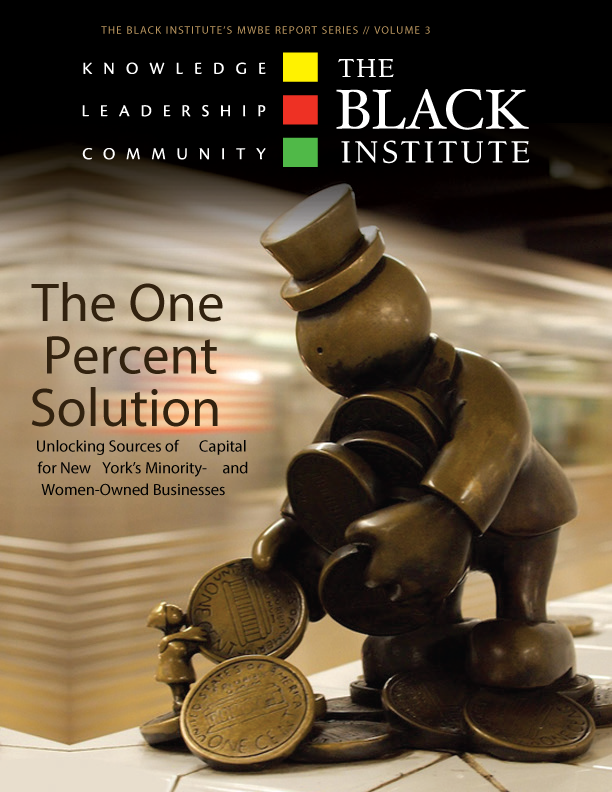
In the two years since the launch, on the steps of New York City Hall, of our Fair Share campaign for minority- and women-owned businesses (M/WBEs), we identified discrimination in lending and other barriers in access to capital as the key constraint that is holding them back. In this third installment in our series of reports on M/WBEs, we seek to identify available sources of capital that can be used to address the lack of access to fair credit and other financial support required to equalize the opportunities for M/WBEs in New York. Specifically, we look into the two sets of institutions over which New York State and City governments have either direct control or influence through business relationships involving public funds. These institutions are, first, public pension systems and the firms to which they entrust their investments; and, second, large banks that serve as depositories of State and City funds.
Since The Black Institute’s first report on disparities related to M/WBEs in April, 2015, and a subsequent series of citywide town hall forums hosted by The Black Institute and The New York City Council Women’s Caucus, there has been a significantly increased focus on the plight of New York M/WBEs. The policy recommendations produced by The Black Institute’s reports have intensified the legislative push for reform. However, while current reform measures being introduced in New York City and New York State seek to address disparities in public contracting, there remains a more fundamental inequality: access to capital. The purpose of this report is to look at ways in which New York City and New York State can address the growing need for fair and equitable capital access for M/WBEs.
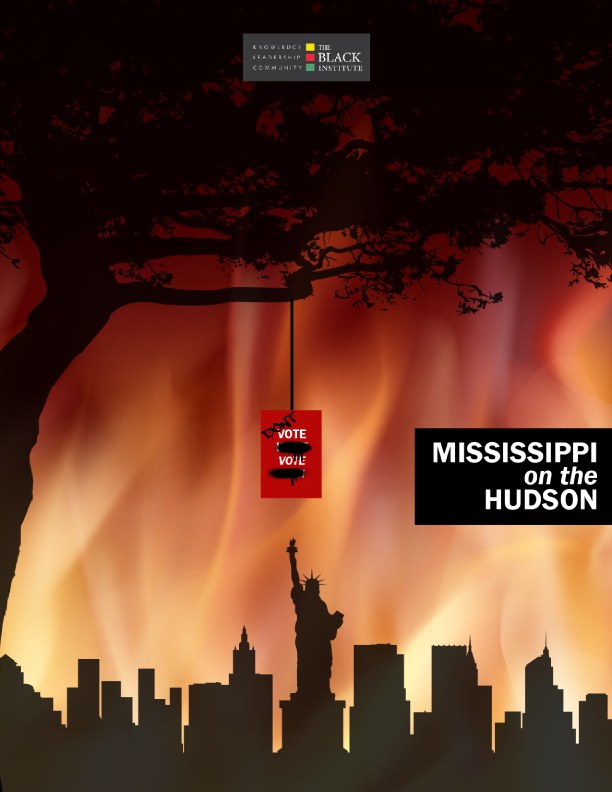
Among the key aspects of voting experience that have not yet received sufficient attention has been the lack of poll site stability and the insufficient number of poll sites in some areas. In this report, TBI provides a detailed analysis of poll site relocations and closings between November 2015 and November 2017, based on poll site lists for this period available on BOE website.
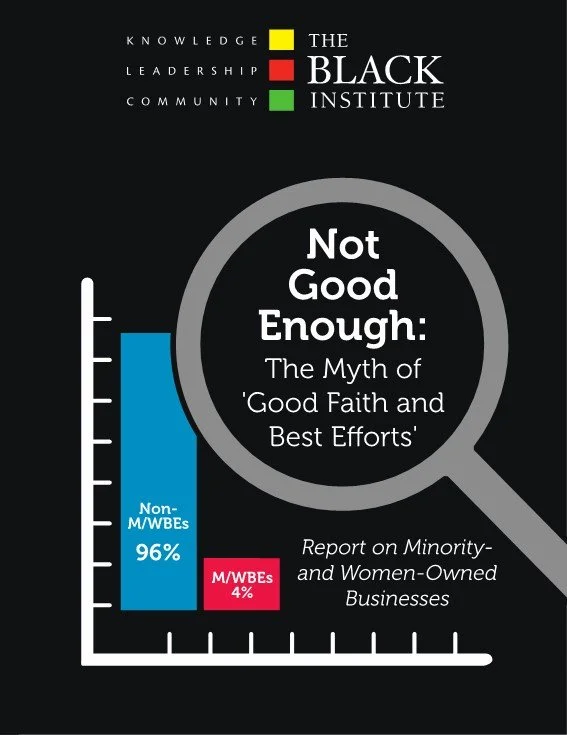
Over the past decades, minority- and women-owned business enterprises (M/WBEs) have grown into an economic force to be reckoned with. According to the latest available data of the U.S. Census’ Survey of Business Owners, in 2002-2007, the number of minority-owned businesses (MBEs) in the country grew by 45.5 percent - from 4 to 5.8 million – to 21 percent of the total. Meanwhile, the number of women-owned businesses (WBEs) grew from 6.5 to 7.8 million, amounting to almost 30 percent of the total businesses in the country. While the number of workers employed by MBEs and WBEs grew more slowly than the number of firms, they too, at 5.8 and 7.6 million respectively, added up to 23 percent of all private firms’ employees.1
Beyond Poison Parks is the latest report from The Black Institute (TBI), a nonprofit racial justice “action tank”; a think tank that takes action. This report is a follow-up to TBI’s original report Poison Parks, published in 2020, to examine how the fight to make and keep New York City’s public parks glyphosate free.
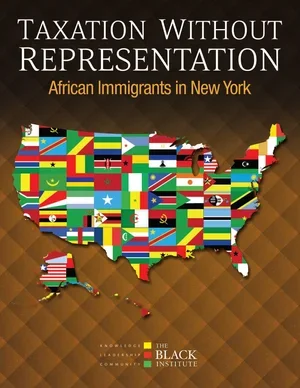
What policy options exist for New York City and State to advance the lagging integration of African immigrants into our economy and society, as well as their representation in public service? In this report, we identify several means by which New York City and State can address the lack of representation of African immigrants. These include: 1) a mayoral and/or a gubernatorial appointment of an African immigrant to head a city and/ or a state agency; 2) establishing Offices of African Affairs, as separate entities under the Mayor and the Governor, respectively (along the lines of similar office in Washington DC, which is a model of best practices in this area); and 3) the election of an African immigrant to serve on the City Council, State Senate or State Assembly.
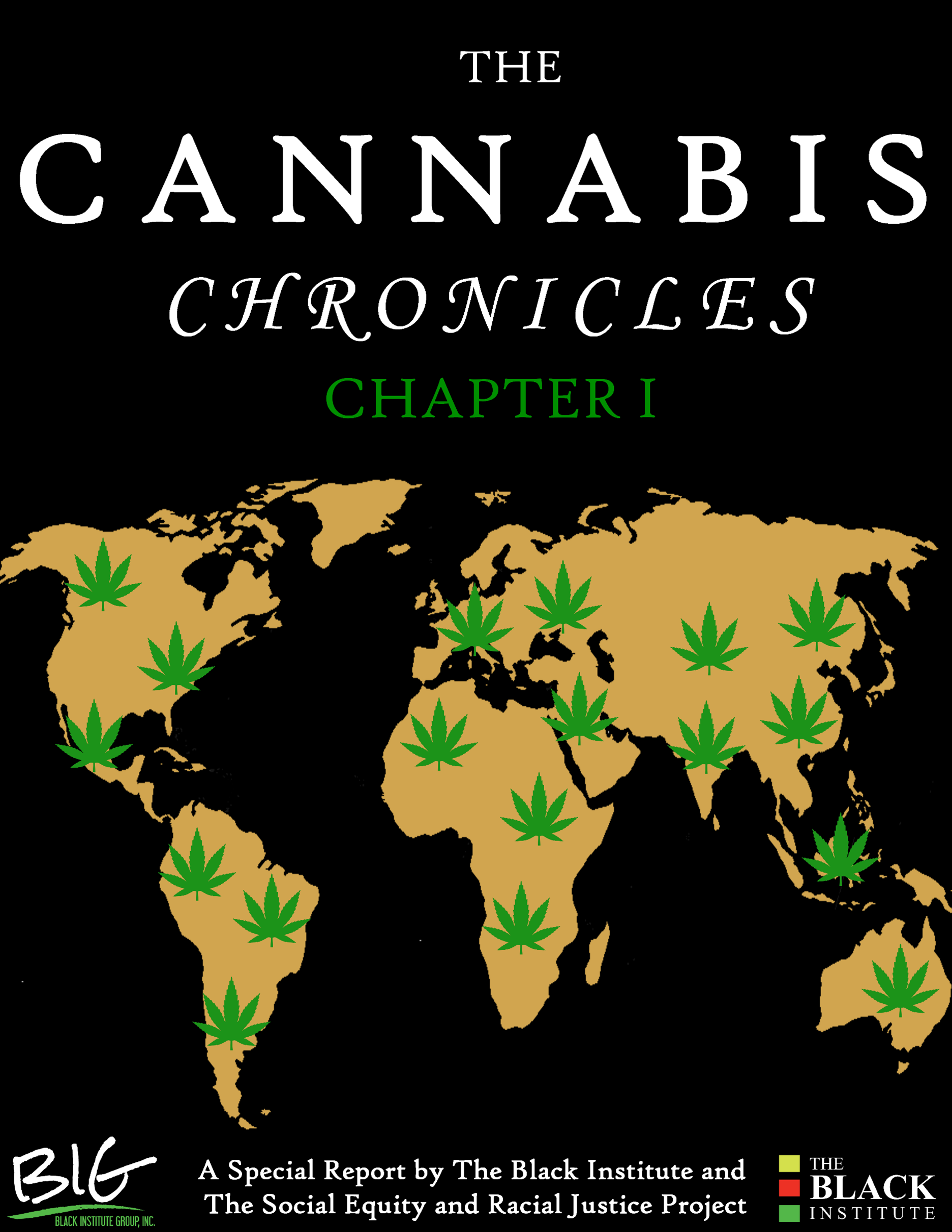
This report is the first in a series that TBI has decided to call the “Cannabis Chronicles,” which aim to talk about cannabis in New York with a deeper perspective. As with understanding anything, it all goes back to history. From its origins as a humble plant in Asia millennia ago to its place in modern day America, cannabis has a long and storied history with immense implications for our understanding of cannabis in the modern era. As a textile, food, medicine, religious herb, drug, and symbol of protest, the story of cannabis in the world and in the United States is in many ways the story of humanity’s growing and changing relationship with itself and the world around it.
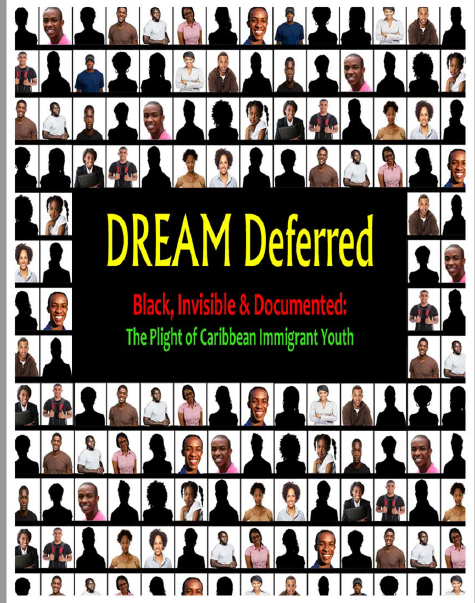
The International Youth Association (TIYA) is a project of The Black Institute. TIYA is composed of a group of young men and women, mostly from the Caribbean, whose parents were recruited to teach by the New York City Department of Education (DOE) from 2001-2006. Well over 300 children emigrated with their parents during this period. While their parents continue to face myriad problems with the immigration process and their status within the DOE, the children of these teachers face a unique struggle. Many of their parents began the petitioning process for permanent residency a couple of years after arrival. As a consequence, the children of Caribbean teachers are steadily becoming undocumented as they “age out” of legal immigration status. Once these young people become 21 years of age, they are no longer considered dependents of their parents and therefore cannot become permanent residents.
The Williams Institute recently conducted a study entitled, Poverty in the Lesbian, Gay, and Bisexual Community, which offered some insight as to why Black Lesbians have been the hardest hit by the economic crisis in the United States. In the general culture there is a perception of gay affluence, but that is nothing more than a stereotype. That stereotype might lead some to be shocked that Black lesbians would be at the bottom of the economic barrel, but it really should not be all that surprising. No other racial demographic was as negatively affected by the recession as Black Americans, and no group within the Black community was hit as hard as Black women. Even though women make up roughly half of the country’s population, they are still considered a “minority” group, so it makes sense that the minority (women) within the minority (Black people) would be hit hard. Black lesbians take that theory one step further... the minority (lesbians) within a minority (women) within a minority (Black people). The discrimination Black lesbians struggle with is thrice compounded.
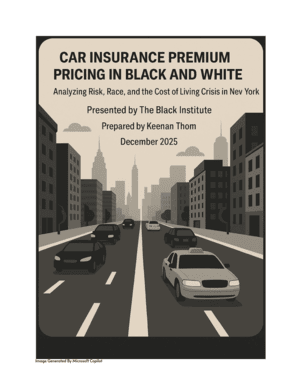
The Black Institute aims to contribute to the discussion on insurance rate increases with a research report detailing the history and context of this issue, the data associated with insurance rate fluctuation across NYS, the policy implications of said findings, and a discussion of recommendations. This paper peels back layers of literature on the subject to explore the reality of race when it pertains to insurance rates, taking industry trends and demographic data into account to assess the equity of the pricing process. Based on the body of research, the institute outlines a number of choice interventions and policy solutions to address the effects of the rise in automobile insurance rates on the Black community, with a focus on New York City and state.
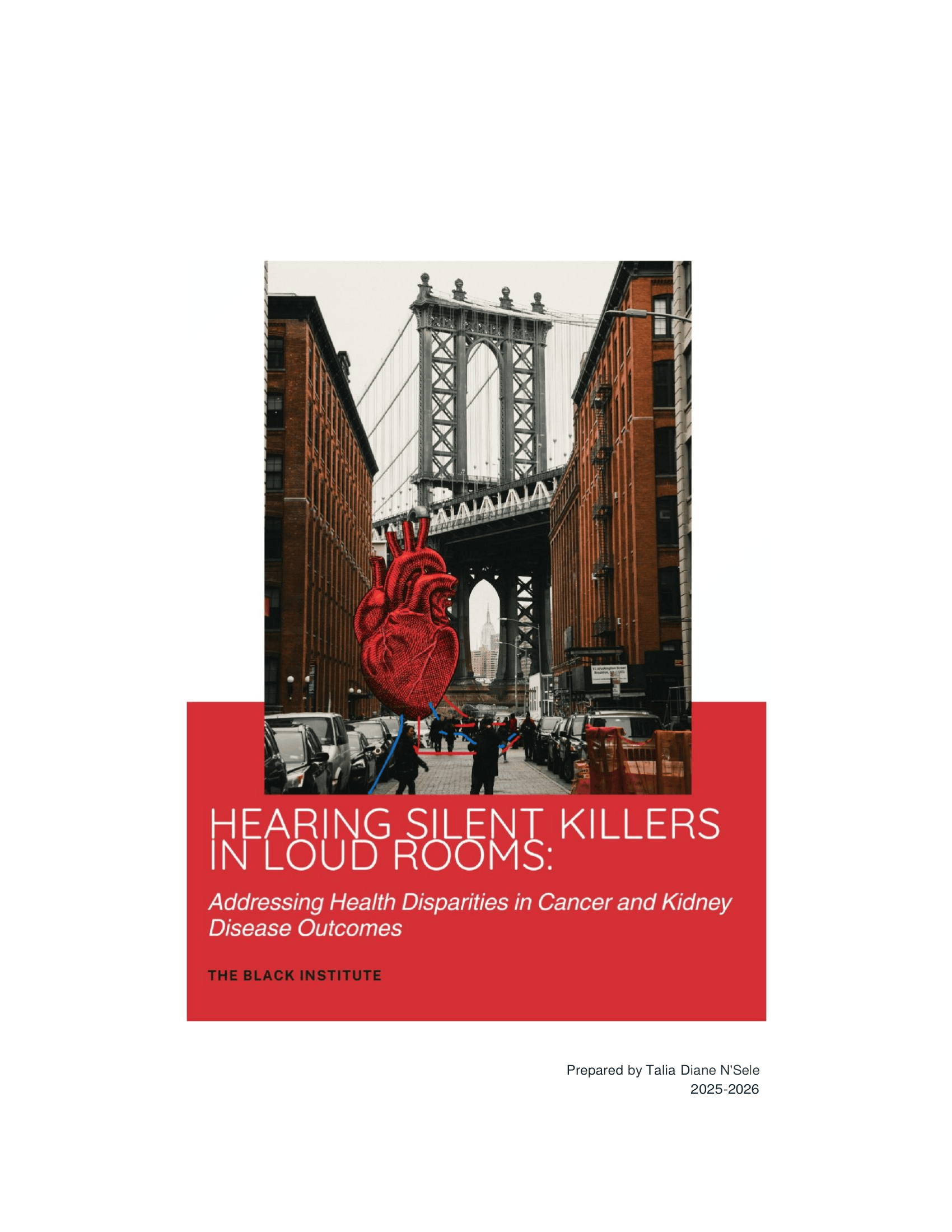
From Presidents Nixon to Clinton and Obama, many administrations have attempted to restructure and reform the U.S. Healthcare system. Despite a desire for systematic changes on both sides of the aisle, healthcare in the United States remains a puzzle: health spending reached an estimated $4.9 trillion, representing 17.6% of the GDP and making the U.S. the nation that spent the most on health in 2023 despite contributing to poorer population health outcomes compared to countries that are smaller economic powerhouses. There exists significant health disparities as Black and Brown people bear the brunt of those poor health outcomes.
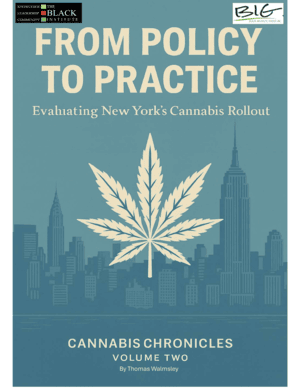
The Marihuana Regulation and Taxation Act (MRTA), signed into law in 2021, set out a bold mandate: to legalise cannabis in New York while advancing social justice, protecting public health, and building an equitable economy. Unlike other states, New York prioritized legacy operators and Social and Economic Equity (SEE) applicants, explicitly pledging to repair the racial and economic harms of the War on Drugs. Four years into implementation, this report reveals a significant gap between ambition and execution in achieving equity goals. The Office of Cannabis Management (OCM), as the primary regulator, bears a significant portion of the responsibility for the industry’s trajectory, However, state leadership, including Governor Hochul, also shares some blame. While progress has been made, licensing delays, legal challenges, and limited equity funding have left many of the MRTA’s promises unfulfilled.
The newsletter that helps you put justice into action.
Join other subscribers who are using data to bring about real change. Receive news and updates from The Black Institute.